// Once a Chemist · Now a Techpreneur

Building from Africa's Grit Valley

Humans + Software things that actually work

21+ years in, and I'm still fascinated by what happens when humans and software actually get along.

Let's Do Something Ambitious

Read my writings →

Alex Bram, co-founder and CEO of Hubtel est. 2005Abalex bram
state: learning
origin: Accra, Ghana 🇬🇭
catalyst: Hubtel

My favourite quotes from my notebook. 1 per visit, shuffles on reload.

When the student is ready, the teacher will appear. When the student is ready, the teacher will disappear.

notebook entry №1

№ 01Meabout

The experiment so far

// lab note I (occasionally) post my thoughts, speeches, and some odd photos here. If you need my profile for any purpose, you may copy from below.

Alex co-founded Hubtel on 12th May 2005 — the very last school day at the Kwame Nkrumah University of Science and Technology (Kumasi), where he graduated with a BSc in Chemistry. He traded the lab bench for a different kind of chemistry: the reaction between people and the software they use every day.

Hubtel has been a 100% self-funded company from start to date and is Ghana's most successful indigenous tech start-up — processing a significant share of digital transactions, with about 700 full-time employees, 12 offices across Ghana, and a dominant market share in Ghana's emerging quick commerce market.

As CEO of Hubtel, he has successfully scaled and pivoted the business through several stages. Alex is a resourceful, growth-oriented leader dedicated to incrementally building value into Hubtel's products. His leadership style is to foster a growth-focused culture that enables Hubtel teams to innovate and thrive.

Alex is also a graduate of the Stanford Graduate School of Business (Executive Education) in Leadership, Strategy & Innovation, and Harvard Business School (Online) in Leadership, Management, Business Analytics and Strategy Execution.

He connects on social media with the handle @TheAlexBram.

Founded
2005
On the last day of school at KNUST
Funding
100%
Self-funded from day one to date
Team
~700
Full-time employees
Footprint
12
Offices across Ghana
№ 02Wrwriting

Thoughts, speeches & odd experiments

Essays and speeches from the journey — on AI, faith, gratitude, and reshaping how Africa tells its own story. Each one filed like an element, because old habits die hard.

№ 03Ctcontact

Get in Touch!

Send me a note and I'll respond as soon as I can. You can also find me where the conversations happen:

Send me a note

If it's about Hubtel, please email support@hubtel.com

// I cannot guarantee a response but — I read everything

← back_to_home()
№ 15Ghghana Featured Guide

15 Lessons to Build a Successful Start-Up in Ghana

Almost every week, someone who follows me online asks how to build a successful business in Ghana. It's a tough question with no single answer — so I spent three years refining the fifteen lessons that genuinely shaped my perspective. Some will feel uncomfortable. Good. Comfort is exactly what a start-up cannot offer you.

Before we start — this is yours. Take it. Own it. Update it. Share it. Quote it, teach it, translate it, pass it on — no permission needed. I only hope you use it to build and grow something real.
1

Start With You

Not your friends. Not your family. Not your financiers. Just you.

Before you write a single line of code or print a single business card, the first audit is internal. Are you ready to be told "no" a hundred times before one "yes"? Ready to work harder than everyone around you for less money than everyone around you — at least for a while? The idea matters, the market matters, the money matters. But the founder is the first product, and you ship that one every single day.

Lesson 1 — the only question that mattersARE YOU EVEN READY?
"Maybe one day…" "Still reading books" "Hungry. Let's go!" THE FOUNDER READINESS METER
If your needle isn't in the green zone yet… that's okay. Better to know now.
2

Start-ups Are Hard. Really Hard.

I won't romanticise it: building a start-up in Ghana will test everything you have. Power cuts on demo day. Payments that bounce. Customers who love your product but pay "next week" for six months.

Lesson 2 — read it twiceIF YOU NEED COMFORT, GET A JOB.

And because it's hard, your job changes. You have to become an evangelist — the person who believes loudest, longest, and on the days when nobody else does. And your first team must be optimists. Skills can be taught. Belief, in the early days, cannot. One pessimist in a five-person start-up is a 20% leak in your fuel tank.

3

Is Your Idea Ready?

You've checked yourself. Now check the idea. I hold every idea up against three big questions:

  • Is your idea big enough to devote the rest of your life to it?
  • Is your product so unique yet simple that people say, "Wow — I need this"?
  • Is your timing so right that the market gives you enough momentum to succeed?

Big enough. Simple enough. Timed right. If you can't answer "yes" to all three, keep refining before you keep building.

4

Start With a Burning Problem

Start-up ideas come in two flavours: vitamins and painkillers. Vitamins are nice-to-have — people smile, nod, and never pay. Painkillers solve a pain that's burning right now — people don't just pay, they chase you to pay.

Lesson 4 — choose your flavourSOLVE A PAIN. OR QUIT.
HOW FAST CUSTOMERS REACH FOR THEIR WALLETS VITAMIN 💤 PAINKILLER 🔥 "Nice idea! Anyway…" "TAKE MY MONEY!" Willingness to pay
Vitamins get compliments. Painkillers get customers. Go with painkillers.
5

Pick the Right Co-Founders

Lesson 5 — guard the doorNO JOKERS! NO TOURISTS!

A joker treats your start-up like entertainment. A tourist is just visiting — they'll enjoy the view and leave when the weather turns. Neither belongs on a founding team.

Choose people with an infinite mindset — people playing the long game, not chasing a quick exit or a fancy title. And remember: you "marry" your shareholders. Shares are easy to give and brutally hard to take back. "Divorce" is messy — in business as in life. Choose like your company's life depends on it, because it does.

6

Speed Is a Superpower

Perfection is the enemy of progress. While you're polishing version 1.0 in private, someone else is learning from real customers in public. Done is better than perfect — because "done" generates feedback, and feedback is the only raw material that builds great products.

Lesson 6 — the founder's cheat codeLAUNCH FAST. THEN FIX.
TWO FOUNDERS, ONE YEAR Launched ugly v1, fixed weekly "Still perfecting the logo…" each dip = a fix Months since "I have an idea!" Lessons learned + value shipped
The green line wobbles because real launches do. The red line is smooth because nothing is happening.
7

Obsess Over Your Users

Lesson 7 — your daily habit"TALK" TO CUSTOMERS. DAILY.

Growth doesn't come from dashboards. It comes from understanding real humans — and, just as importantly, from real humans understanding your product.

Notice the quotes around "talk". A conversation is talking. So is watching someone struggle with your app in a queue. So is reading the complaint a customer typed in frustration at 11pm. So is the question a market woman asks you twice because your product confused her the first time. Every one of those is a free consulting session. Collect them daily.

8

Do Things That Don't Scale

In the beginning, forget elegant systems. Your first 100 customers will not come from a clever algorithm. They'll come from you — personally, awkwardly, one at a time.

Lesson 8 — the unscalable staircaseCALL. KNOCK. BEG. CLOSE.
CALL KNOCK BEG CLOSE First 100 customers! no shortcuts here…
Fight now. Scale later. The staircase only goes one way.

One day you'll automate all of this. But you earn the right to scale by first doing the things that don't.

9

Build a Product, Not a Company

Young founders love building companies: the logo, the org chart, the "culture deck", the valuation conversation. Here's the uncomfortable truth — culture, structure and valuation are all irrelevant if the product sucks.

Lesson 9 — where the energy goesMAKE ONE THING GREAT.

One product. One burning problem. Solved so well that people tell their friends without being asked. Companies are what grow around great products — never the other way round.

10

Ignore the Noise

Every year has a "thing". A buzzword every panel discusses, every pitch mentions, every headline screams. Some of it is real. Most of it is noise. Your survival depends on telling the difference.

Lesson 10 — ask of everythingREAL TRACTION OR FAKE TREND?
LOUD VIBES vs PROFITABLE VALUE HYPE! Panels! Headlines! …where did everybody go? quiet, boring, paying customers Time Attention / Money
Stay focused. Build profitable value — not loud vibes.
11

Fundraising Is a Tool, Not a Goal

Raising money feels like winning. It photographs like winning. It is not winning. Money doesn't solve broken products — it just lets you break things faster and more expensively.

Lesson 11 — the real flexGET PROFITABLE. STAY DANGEROUS.
$ BROKEN PRODUCT PROFITABLE PRODUCT in one end, out the other… stays full. stays dangerous.
Funding poured into a leaky product just leaks faster. Fix the bucket first.

Raise money when it accelerates something that already works. A profitable start-up negotiates from strength; a desperate one signs whatever is put in front of it.

12

Ghana Is Not Silicon Valley

Most start-up advice you'll read online was written for a different planet — one with cheap capital, instant payments, perfect roads and customers with credit cards. Copy-pasting that playbook into Accra is how good ideas die.

Lesson 12 — translate everythingYOUR PLAYBOOK MUST BE LOCAL.
SILICON VALLEY 🌉 GHANA 🇬🇭 Raise first, build later Credit cards everywhere Blitz-scale or die "Move fast, break things" Revenue first, raise later Mobile money & cash 💪 Profit first, then grow Understand the chaos. Embrace it. Innovate in it.
Same game, different pitch. Learn the rules of the field you're actually playing on.

And remember: Africa is vast. What works in Accra may flop in Kumasi, let alone Lagos or Nairobi. The founders who win here aren't the ones who imported the cleverest playbook — they're the ones who understood the chaos, embraced it, and innovated within it.

13

People Will Doubt You

Your relatives will ask when you're getting "a real job". Friends will smile politely at your idea. Investors will pass. Some customers will say no without even hearing you out. None of this is unusual — it's the standard package.

Lesson 13 — the only responseBUILD ANYWAY. LEARN. ADAPT.

Don't allow doubt to harm you — let it inform you. Sometimes a doubter is pointing at a real flaw; fix it and thank them. The rest of the time, keep moving. Faith is a founder's ONLY asset in the early days. Guard it like working capital — because it is.

14

Luck Favors the Persistent

People look at successful founders and say "they got lucky." Often true! But here's what the luck chart actually looks like:

Lesson 14 — the secret strategySTAY ALIVE LONG ENOUGH.
WHERE "LUCK" ACTUALLY LIVES most people quit here ↓ "lucky breaks" ✨ Years of persistent building Lucky breaks collected
Funny how the stars only appear on the part of the chart where you didn't quit.

You move mountains by carrying away stones in bits. So pace yourself, celebrate small wins, and enjoy the journey — it's long, and that's exactly the point.

15

Be Your Own Call-To-Action

This is the lesson that makes the other fourteen matter. You've read the advice. You've nodded along. Now comes the only part nobody can do for you.

Lesson 15 — no permission neededGO BUILD. DON'T WAIT.

You don't need permission. You don't need a famous mentor, a perfect pitch deck, or an incubator's blessing. Ghana is full of pains. Go solve them! Every queue, every delay, every "that's just how it is here" is a business waiting for a founder stubborn enough to fix it.

So here is my challenge to you: what painkiller will you build in the next 6 months that someone will pay for?

Not a vitamin. Not a vibe. A painkiller — something that hurts enough today that someone will hand you money for relief. Write it down. Then start.

"Entrepreneurs are people who do more than anyone thinks is possible, with less than anyone thinks is possible."

← Back to home
← back_to_home()
№ 13Aiessay Essay

AI Won't Take Your Job — But It Will Force You to Evolve It

How doctors, lawyers, accountants, and other knowledge professionals can stop being gatekeepers and start becoming indispensable partners in human flourishing.

For years, the conversation around artificial intelligence has been dominated by fear: "AI is coming for our jobs." A close childhood friend of mine — a highly-educated senior engineer at a global payments company in Texas — voiced exactly that worry just yesterday.

My response surprised him: AI will not take your job. In fact, it will create far more jobs than it displaces, because human creativity and our endlessly evolving desires will always outpace the number of people available to fulfill them.

What will disappear are what I call "information-blockade jobs."

These are the roles built around cramming specialized knowledge into a human brain and then charging for access to it. Think doctors who act as the sole interpreters of medical data, lawyers who monopolize legal interpretation, or accountants who serve as the only reliable translators of financial rules.

AI is democratizing that knowledge at lightning speed. Patients can already feed symptoms and lab results into widely available advanced models and get remarkably accurate insights. Contracts can be drafted and reviewed in seconds. Tax strategies can be optimized instantly. The gatekeeping model is collapsing — and that's a good thing.

It's good because these professions have, for too long, unintentionally blocked billions of people from the very services they need for personal growth, security, and joy. The future belongs to professionals who refuse to cling to their old role as knowledge vaults and instead reposition themselves as partners in what people actually want.

The New Goal is to Focus on the End Goal, Not the Process

Every profession has an ultimate human outcome — the thing people are really paying for. When you anchor yourself to that outcome instead of the old delivery mechanism (your specialized brain + expensive time), you become future-proof.

Here's how three major fields can make the shift:

1. Healthcare: From Occasional Diagnosticians to Architects of Longevity

The true purpose of healthcare isn't "come see me when something hurts." It's a long, vibrant, high-quality life.

  • Old model: Patient books an appointment, doctor interprets tests, writes prescription, repeat every few months.
  • AI model: Patient runs their own continuous monitoring (wearables, at-home labs, AI analysis) and gets instant, personalized insights.

Repositioning playbook for doctors

  • Become the longevity coach who designs multi-year personalized protocols for peak performance, not just crisis intervention.
  • Shift revenue from per-visit fees to subscription-based "healthspan optimization" programs that include AI-powered monitoring, lifestyle engineering, advanced therapies, and human-to-human accountability. I want to see doctors in Ghana open Healthspan Clinics instead of just health practices based off old and dying models of "come and consult me only when you are sick".
  • Doctors in Ghana and around the world must specialize in the irreplaceable human elements: empathy in breaking bad news, motivational coaching, ethical guidance on experimental treatments, and the nuanced judgment AI still lacks when data is ambiguous or values conflict.

Doctors who do this won't lose patients. They will rather gain hundreds of thousands of lifelong clients who see them as the partner ensuring they thrive into their 90s and beyond. On the current old model of consultation, many doctors only attend to few hundreds of patients in their lifetime, with very low outcomes for longevity.

2. Law: From Legal Gatekeepers to Strategic Life and Business Partners

People don't want "a lawyer." They want peace of mind, protection, and the ability to move forward boldly.

  • Old model: You draft documents, review contracts, appear in court.
  • AI model: Basic contracts and compliance checks are instant and near-perfect.

Repositioning playbook for lawyers

  • Move upstream to preventive strategy and vision alignment. Help clients build companies, families, or estates that are structurally antifragile from day one.
  • Offer "life architecture" services: integrated legal, tax, and succession planning that evolves automatically with AI tools while you provide the human judgment on ethics, family dynamics, and long-term values.
  • Lawyers in Ghana and across the globe must specialize in high-stakes negotiation, courtroom presence, regulatory advocacy, and creative deal structuring — areas where empathy, storytelling, and moral authority still matter more than raw knowledge.

The lawyers who pivot to the new model will thrive to become the ones with hundreds of thousands of clients that call them "my strategic partner," and not the few disappearing clients on the current model who know them as "my lawyer who bills by the hour, so I try as hard to avoid them".

3. Accounting & Finance: From Compliance Clerks to Wealth and Freedom Designers

Clients don't want accurate books — they want freedom, security, and the ability to build the life they dream about.

  • Old model: Monthly reconciliations, tax filings, audits.
  • AI model: Real-time automated bookkeeping, predictive cash-flow modeling, and instant tax optimization.

Repositioning playbook for accountants

  • Become wealth architects who use AI as a superpower to simulate thousands of future scenarios and help clients make bolder, smarter decisions.
  • Shift to advisory subscriptions focused on lifestyle design: "How do I structure my business so I can retire early and fund my passion projects?" or "How do we protect generational wealth while minimizing friction?"
  • Excel in the human elements: family business mediation, ethical investing guidance, crisis navigation, and translating complex numbers into clear life choices.

Accountants who make this leap will be seen as the people who unlock possibilities rather than the people who enforce rules.

The Universal Playbook for Any Knowledge Professional

No matter your field, the repositioning formula is the same.

  1. Identify the true human end-goal your clients are chasing (longevity, freedom, legacy, joy, security — whatever it is).
  2. Make AI your co-pilot, not your competitor. Use it to handle the rote, repetitive, and knowledge-heavy work at superhuman speed.
  3. Double down on what AI can't replicate: deep empathy, moral judgment, creative synthesis, long-term relationship building, and the ability to navigate ambiguity and conflicting human values.
  4. Charge for outcomes and relationships, not hours or information. Subscription models, success-based fees, and ongoing advisory retainers will replace the old "billable hour" trap.
  5. Become a creator and educator. Host communities, write thought-leadership content (like this one, with AI helping you), build tools, or design experiences that amplify human potential. The most valuable professionals will be those who multiply opportunities for others.

The Bigger Picture: Abundance, Not Scarcity

My friend in Texas worried about AI taking his job. I told him the opposite is true. Every time AI removes a layer of friction or democratizes knowledge, it unleashes new waves of human desire and creativity. We will invent new industries, new art forms, new experiences, and new problems worth solving faster than we can staff them.

We saw this at the start of the internet revolution. I still remember Uncle George Laing (of Kyekyekule fame) telling us for the first time in 1993 about this new technology called the internet that will connect all information across computers and change the world. Back then, many worried about their jobs, but today see how many jobs and opportunities it has created. I see a very similar phenomena here.

The professionals who cling to their old gatekeeper identity will feel replaced. The professionals who reposition themselves as partners in human flourishing will be more in demand — and more fulfilled — than ever.

The choice is yours. The future isn't coming for you and your school knowledge. It's waiting for you to step into a bigger role that can benefit a lot more people.

← Back to home

← back_to_home()
№ 20Hbhubtel Speech

A Letter to God

Delivered at Hubtel's 20th Anniversary Thanksgiving — twenty years of the Hubtel journey, written as a letter of gratitude.

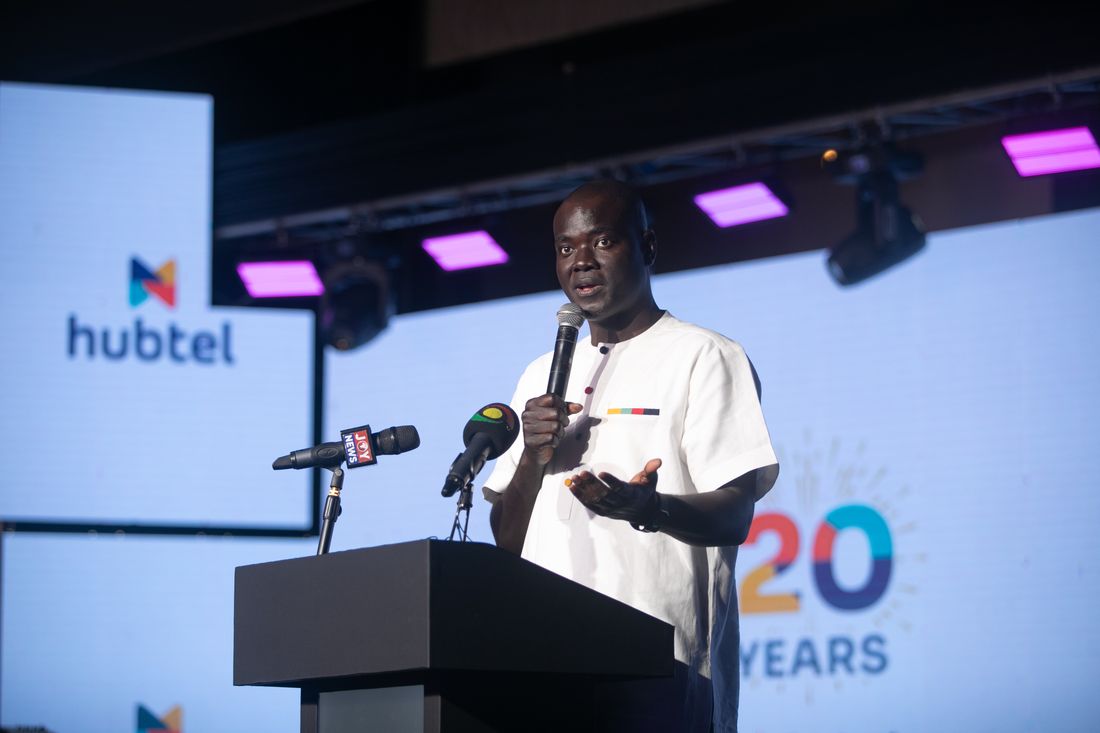
Alex Bram reading A Letter to God at the podium during Hubtel's 20th Anniversary Thanksgiving
Reading the letter — Hubtel's 20th Anniversary Thanksgiving, Accra, 12 May 2025

The Honourable Minister for Justice & Attorney General, The Honourable Minister for Communication, Digitalization and Innovation, The Honourable Minister of Youth Development & Empowerment, Director of Fintech at the Bank of Ghana, Chairman of the Audit Committee of Hubtel's Board of Directors, CEOs, Distinguished Guests, Head of Departments, Partners of Hubtel, Staff of Hubtel, Our Friends, Ladies and Gentlemen,

I'm sorry to disappoint all of you this evening. Unfortunately, I do not have a speech to give.

I have instead written a letter to God in the hopes that as you pray with us this evening, you will help me deliver this message to him.

My letter reads.

Dear God,

Tonight, I come before You not to ask, but to thank You.

20 years ago, none of us knew what lay ahead. Only You did.

When Ernest and I missed the chance to enter medical school at the Kwame Nkrumah University of Science and Technology — a moment that felt like the death of our life's plan and that of parents' dreams. You were quiet, but not absent. The door closed gently, and even in our disappointment, You were there, building a better purpose for our future. If only we could learn how to wait, study, and get ready.

We didn't know it then, but that rejection was the beginning of the redirection — a divine pivot. I asked You for guidance during those uncertain times. I prayed, “Lead me, oh Lord. Guide me to be useful. Use me as a vessel.” And You did — not in the lecture halls or the laboratory, but in the corridors of life, through failure and friendship, through events that seemed ordinary at the time, but were heaven-sent.

You gave us the greatest education outside the classroom. In one of the lessons, I ran for political office as President of the science faculty and lost — not just lost, but lost badly and pathetically. It was so painful, but You had better plans for me.

You placed me in a different kind of leadership — not through votes, but through favour. When Francis Kwantwi Barima handed me the role of Republic Hall Week Chairman, I didn't know that I was about to learn the very lessons I would need one day to start and run a company.

That hall week — that event — it became our proving ground. Ernest and I, along with seven others, including our most tireless teammate, the now Honorable Minister of Communication, Digitalisation & Innovation, Hon. Sam George, we gave it everything.

And You rewarded our effort. The success of that event gave us hope. It gave us belief. It gave us a can-do spirit. It gave us self-confidence to start anything. It gave us direction. It gave us Hubtel.

Dear God, I still remember the morning of the 12th of May, 2005. The last day of school. I stood before my mirror and prayed to You. And when I opened my eyes, I felt ready. I walked out with courage, not knowing what would come, but knowing You were with me.

That same day, I went to Adum and printed our first business cards. No investors. No office. No fanfare. Just a name and a dream, and the promise of Your guidance. That was the day You allowed Hubtel to be born.

In the beginning, we didn't know what we were doing. We only knew that as long as we stood for good and pursued love for our customers and mankind, You will be with us.

Dear God, we remember with gratitude the early years — the fragile, uncertain days between May 2005 and December 2008 — when faith was often our only capital.

When Ernest and I returned to Accra after our time at KNUST, You reunited us with our dear brother, Leslie Gyimah. Teaming up with him, You gave us more than just a laptop and a car. You gave us courage — the kind that comes from old bonds and shared dreams and a special friendship that can only be built at St. Augustine's College. This bond became the foundation of something greater. This made us all give freely — of our time, our tools, our spirit — and in those fragile early days, Your quiet support carried more weight than anyone will probably ever, ever know.

Last April, You called Leslie home. And while our hearts still ache, we remain forever grateful that You placed him in the Hubtel story. His fingerprints are on the foundation of this company, and his memory will live in everything we continue to build.

Dear God, when You rewarded our labour with our first sale in October 2005, it was a cheque for GHS 500 from North American Airlines. It meant everything. We carried that cheque from bank to bank for over six weeks, trying to convince someone, anyone, that we were a real business. And in that waiting, You taught us our first real lesson in patience and persistence.

Then more cheques came — from travel agencies, old school associations, churches, even people sending SMS messages for parties and funerals. It wasn't glamorous. But it was real. We ended that first year with gross revenues of GHS 6,000. We saw it not as profit, but as confirmation that You were working. Working for us, working through us, working for our good, working — as long as we did your good.

While we worked hard, we fumbled through letters and proposals and invoices and code. We stumbled through meetings and presentations and those moody live demos. We chased ideas that didn't work, and some that barely survived. But somehow, You kept our drive alive — sometimes just enough for the next day, just enough for the next idea, just enough for the next good signal, or just enough for the next prayer.

Through all the early days we couldn't pay ourselves, all the early days we sacrificed everything, days we wondered if we were just being foolish, You whispered to our hearts, “Keep going.” And we obeyed.

Dear God, today we remember with gratitude the year 2006, when we began receiving attention from the more formal sectors — banks, insurance companies and even the Bank of Ghana. Somehow, You helped us carry ourselves well enough to enter the boardrooms that once intimidated us. There, You placed several mentors in our path — IT managers like Mr. Romeo Bugyei, Mr. Joe Adjei, Mr. Alex Kissi, Mr. Tamakloe and many others. They didn't just buy from us; they shaped us. We watched them run their offices, structure their meetings, manage their people. And we adapted their ways. They were quiet teachers. And we thank You for each of them.

By the end of 2008, when our gross revenues exceeded GHS 1.2 million, we came to You with a new prayer: Lord, give us a place to grow. A place to plant ourselves and build.

You answered that prayer through Mr. Gideon Anim — our landlord who became so much more to us. A man whose humility, guidance, patience, and fatherliness could only have been heaven-sent. Through him, You showed us that provision doesn't always look like a miracle — sometimes it comes wrapped in wisdom and presence.

Those years laid the foundation for our first office building. Quiet, steady, and sacred.

Then came a new dimension. A season of favor we had not seen before. In 2009, You shifted something in our favour. The mobile networks that once overlooked us began to notice. And once again, Your timing was perfect. Because we were ready; sharpened by the quiet years and strengthened by discipline. Our preparedness met the opportunity You sent through the doors of the telcos, and a new era began: premium SMS billing.

Through the next few years, from 2010 onward, You allowed us to become a conduit for information and access. Through SMS content messages, millions of subscribers across Ghana began to experience something new — personalized services in banking, entertainment, education and premium notifications. We were helping build not just a new digital culture but also preparing Ghana for a new age of service digitization.

And then between 2011 and 2015, You allowed us to rise to a position we had never imagined. Out of 47 value-added service providers, Hubtel claimed nearly 40% of the market. We had matured. We had earned respect. And when MTN Ghana named us, their Top Revenue Earning Partner, we knew it wasn't just an award — it was a quiet confirmation from You, that we had stayed the course.

But even in the height of success, You reminded us not to be complacent. In 2015, as internet access grew, the world began to change again. The very market we had helped pioneer began to disappear slowly. Customers began to prefer online experiences over SMS ones. But with all these going on, some of the early successes had gotten too much into our heads.

Even when the signs of decline became undeniable and the market was changing fast, we moved to ignore these signs, relied on our own knowledge, and responded. We expanded — new hires, new regions, new countries. At first, it felt like progress. There was energy again. But the lessons came quickly. The declining momentum of late 2015 rolled into 2016 and collided with reality. We learned the hard way — what not to do, how not to scale a tech company.

Finally, in 2016 our growth slowed. The momentum dipped. It was hard. Very hard. But it was NOT a punishment — it was a new prompting.

You were calling us again: calling us to reinvent, calling us to rediscover, calling us to build for what's next, not just what was.

Dear God, as I have mentioned to You several times, we are very grateful for the growing pains You put us through from 2016 to 2018. When our momentum stalled, and the outlook became bleak, we felt it — not just in the numbers but in our spirits. The path ahead was no longer clear. But even in the fog, You sent us help.

You sent us Stanford SEED — a gift we never expected. Through the Stanford Graduate School of Business and the guiding presence of a man named Hans Daniel Nilsson, You gave us new eyes to see. We began learning, truly learning, how to build for scale — not just to grow, but to grow well.

By 2018, despite several changes, we were almost broken.

Too many product failures. Too many wrong turns. Too many hard situations. We were battered — not just as a company, but as people. We questioned ourselves. We doubted our decisions. We wondered if the best days were behind us.

But You, oh God, had prepared a remnant.

A few among us were ready to begin again — not the loudest, not the most decorated, not the most skilled, not most gifted, but the humblest. They were willing to lay down old knowledge, unlearn old ways, and trust You for something entirely new.

And from that brokenness, You brought forth a rebirth. In just one year, You led us to build an entirely new platform. A new company, really. New systems. New processes. A new vision. The ashes of failure became the soil of resurrection.

And through it all, You never left us. You generated new strength for the people You had prepared for our rebirth. You surrounded us with a new team spirit — and elevated our relationships from just coworkers to brothers and sisters in purpose. We have become family. Your people who have become the Strategy Committee of Hubtel.

Dear God, I am happy that the humble people You gifted us with from those days of difficulty have become the people who have believed in the new vision, even when we all struggled to explain what Hubtel was becoming. They stayed. They built. They trusted. And they too became vessels in Your plan.

Thank You oh God for the gift of Augustine Adjei, Bill Inkoom, Eric Gershon Akoto, Daniel Frimpong, Elsie Bram, Francis Wilson, Eben Boffour, Owusu Marfo, Michael Adom, Patrick Asare Frimpong, Jonathan Ansah, and their teams.

Even though we have seen our fair share of storms — competitors with more money, ideas that failed, unspoken intentions that became lawsuits, partners who walked away, and loved ones we lost too soon. Through it all, You were there in the quiet after every storm, rebuilding us with each small victory and reshaping us with each small defeat.

Dear God, from these loins of near despair the year 2020 came upon us with a world reeling from uncertainty and pandemic. We are most grateful that even in our fear of what was to come You began to lift our eyes again. Slowly, steadily, You restored our footing in the most surprising style.

In the midst of the pandemic, fear and uncertainty, You helped us listen more closely — to our customers, to one another, and most importantly, to You. And in that stillness, You gave us clarity: that our purpose was never just to build a platform, but to build systems for the progress of the people of Ghana. To create order, simplicity, elegance, and access in the simple transactions of everyday life that we all take for granted.

You helped us see that commerce — the simple act of buying and selling — could become a force for connection, inclusion, and even healing. You allowed the work of our hands to find favor — in communities, in government policy, in delivery systems and in national payment platforms. You gave us voice not to boast, but to serve.

And so tonight, as we did on day one, with hands open and heads bowed, we do not celebrate ourselves. We mark 20 years of this journey with a pause and not an applause, and we bow our heads in gratitude to say: Lead us, Lord. Lead us into the next chapter with the same grace that brought us this far. Make Hubtel a place of hope — for young graduates, for striving retailers, for uncertain start-ups, for business owners, and even for struggling large companies. Make us a bastion of innovation — not for fame, but for impact. Make us a company operated for good — deeply human, deeply honest, and deeply useful. Let Hubtel be a reminder to all Ghanaians that when You are in the story, no beginning is too small, no loss is final, and no dream is out of reach.

Thank You God for opening doors we never knocked on.

Thank You God for bringing us opportunities we didn't even know how to pray for.

Thank You for making Hubtel one of the early successful Ghanaian enterprises and a testament to Your promise that more companies like Hubtel are coming from Ghana, built by Ghanaians, for the good of the people of the Republic of Ghana.

Thank You, God, for constantly stretching our faith and repeatedly teaching us that growth isn't always in the numbers, and that sometimes, it is in the resilience to show up again and again and again.

Thank You God for teaching us not to chase success, but to seek usefulness. And that in our pursuit to be useful, You give us success — in Your own time.

Thank You God for being there with your ever-present guidance, when we had to pivot and change direction, when our numbers outgrew our management capacity, when we became an uncomfortable political topic, when the media negatively noticed, when the public misunderstood what we stood for, and when unfamiliar storms brewed. Thank You for writing it all for our good.

Thank You for every mistake that taught us humility.

Thank You for every small win that reminded us of Your favour.

Thank You for every single person who walked with us — from the beginning until now.

Thank You for how far You have brought all of us gathered here tonight.

Thank You for how far You have brought Hubtel.

Thank You for how far You have brought the people and the Republic of Ghana.

In Jesus' name, I pray with thanksgiving. Amen.

Thank You all for your attention.

The evening in photos

Twenty years, one room, and everyone who walked the journey — captured at the Thanksgiving Dinner in Accra.

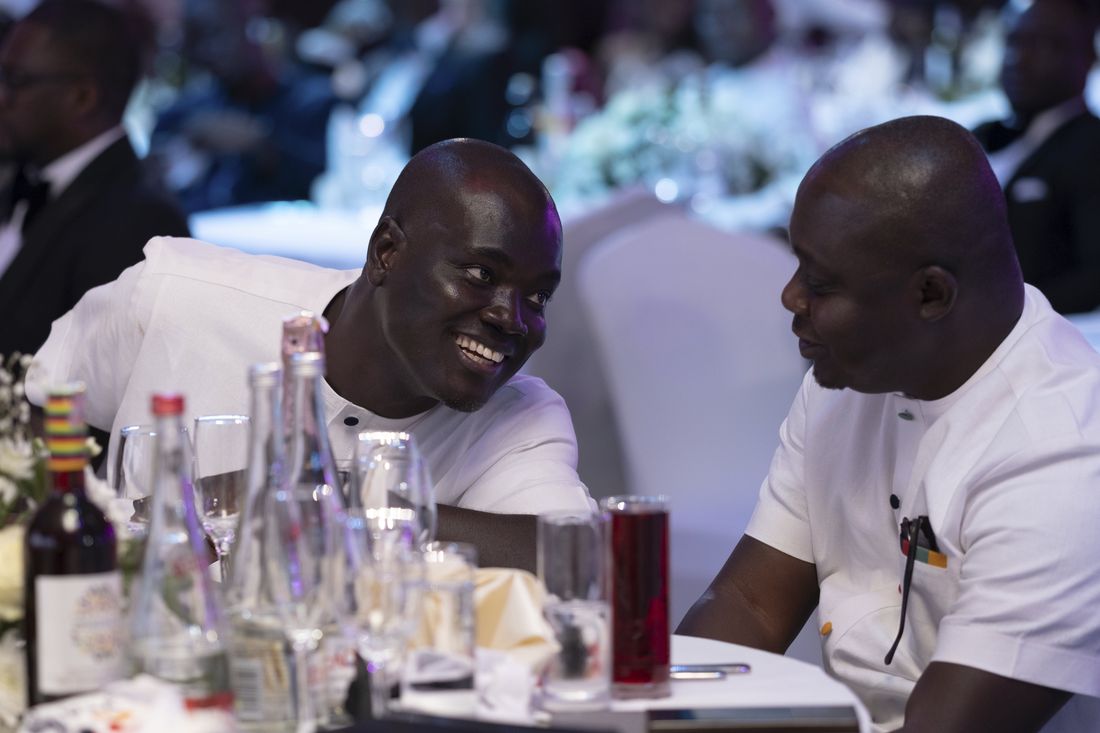
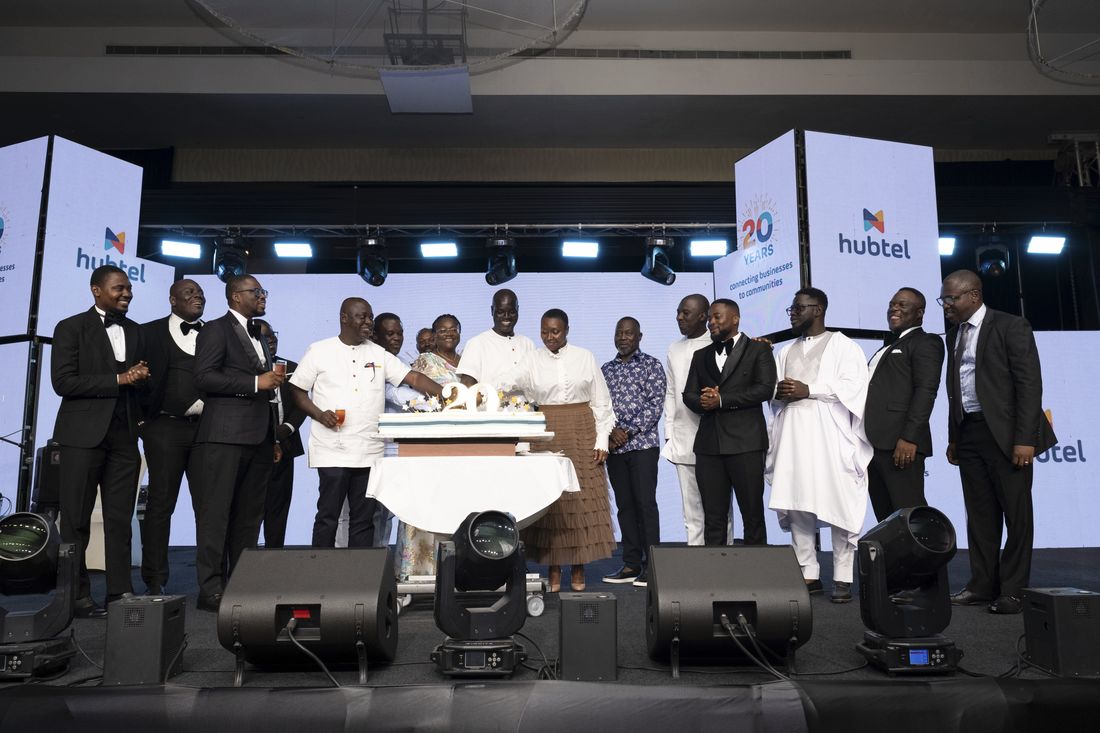
Alex Bram speaking at the podium with the Hubtel logo and 20 Years branding on screen A guest speaker addressing the room from the podium Wide view of the stage and 20 Years screens during the speech Cutting the 20th anniversary cake together Smiles around the anniversary cake Confetti falling as the cake is cut A standing ovation at the VIP table An embrace amid applause on the floor A long hug between old friends Laughter shared across the table A huddle of conversation at the dinner table The Hubtel family celebrating with napkins in the air The full leadership group on stage around the 20th anniversary cake Confetti and sparklers as the celebration reaches its peak

…and the napkins flew. What a night.

← Back to home

← back_to_home()
№ 94Auaugustine's Speech

Speech at the 94th Anniversary of St. Augustine's College, Cape Coast

An address to one of Ghana's great schools — and my alma mater — on its 94th Anniversary and Speech Day, on perseverance, embracing failure, and finding your spark.

Good morning, everyone. Headmaster, teachers, and non-teaching staff of our school, the National President and members of NEC, our very own President and Covenor Elliot Asiedu, and the executives of APSU 99, fellow classmates, seniors, parents, and you brilliant students of the greatest college of the land, St. Augustine’s College.

It is a true honor to be here today in this very familiar space, our most favorite quadrangle. The fondest memory I have of this quadrangle happened right behind us on the staircase of St. Theresa’s House. Our school prefect then, Shadrach, was leading us to hand in our prefect badges in an unprecedented revolt that has become folklore for our year group. We ended up with 2 batches of prefects for our year group, quite a record. As the last year group of the century of the school’s founding, we have always seen ourselves as a special group. A testament of that is today… both of the Chairman and Guest Speaker are from the same year group.. and we have completed about 6 different projects in record time.

These notwithstanding I want to especially thank our headmasters, teachers, and workers – of both past and present – for keeping this school going and thriving in the last 25 years that we have been away and just watching from afar.

These dormitories, the classrooms, the administration block & chapel, the lawns, the sports fields – for us as past students they all hold so many memories of friendships formed, lessons learned, and dreams that began to take shape.

We cannot thank you enough for the work you do for St Augustine’s College. We urge you to do more to maintain our pride and heritage here.

In January of 1997, my classmates and I entered these walls, filled with dreams, anxieties, and the boundless energy of youth. I remember us with our chop boxes and trunks, leaving behind our parents’ direct care to become friends with perfect strangers and submit to seniors who spare no opportunity to ‘welcome’ us and make us feel so very ‘comfortable’.

Today, I have heard and seen many of the students who have very similar stories and the same dreams, the same spark, the same energy, and almost the same backgrounds that we once possessed.

Within the boundaries of this school we would come to embrace the spirit of what makes St. Augustine’s College a special place. Indeed many of us began adulthood here and started to find our way to a better future from here. It has been so since 1930, you come in, take in the experiences, allow the school to go through you and you pass through, and when your time here is done, you must find a path to that which challenges you, and pursue it with relentless perseverance.

Apart from some few shocking differences which we didn’t experience when we were here, like the state disrepair of the infrastructure, students hounding us to rain cash on them, and the quality of food served in the dining hall, life here for us the 99-year group was quite the same.

For the 1999 year group that day came in December of 1999, when our time here came to an end and we walked out for the last time, nervous, yet excited about the future we faced.

Today, some 25 years later, we are all back here, filled with a profound sense of nostalgia and a deep appreciation for the foundation this school has provided us.

And so, with that sense of nostalgia and gratitude, I want to share with you what I have done since I took those steps out of here in the hopes that you might pick a few lessons from my 25-year journey to today.

I don’t know what is trending these days, but the year I left here, there were three very popular ways to become successful in life as a young Ghanaian becoming an adult.

The first one was to become a top professional—like a doctor, lawyer, pilot, engineer, architect, etc. The second was to travel abroad to hassle your way through a more rewarding economy and society. The final one was to build a business and hope it thrives and you become rich. During those days, we talked about success and the future constantly as classmates.

As we left St. Augustine’s College, we all scrambled to pursue our successful lives along these paths. Like my classmates and many others from those days, the three ways occupied my thoughts for many years as I grew up into a young man. Somehow, as fate would have it, within just one decade of leaving here, I found myself trying all three ways.

Here are how my trials on the three options played out.

Option Number 1: Becoming A Top Professional

My father worked as an Auditor in the Ghana Audit Service, and my mother sold used clothing at Kantamanto in Accra, so I didn’t grow up with much at home. From the time I started bringing some good grades home, my parents dreamed of me becoming a medical doctor. So, within months of leaving here, my Dad got me a job as a revenue officer at the Korle Bu Teaching Hospital for one year.

At Korle Bu, I quickly discovered that I was too impatient to attend to patients of any kind.

The final blow came when our WASSCE results were released, and despite making some excellent grades, I couldn’t make it into medical school at the Kwame Nkrumah University of Science and Technology, so I settled for a Bachelor of Science degree in Chemistry. And officially gave up on the option of becoming a top professional doctor.

That opportunity gave me four years to think about my next two moves to success. Knowing that becoming a top professional was officially off the books for me, I settled to become an average-performing student and spent my time at the university plotting how I could make the other two happen.

Option Number 2: Traveling Abroad, Working In A More Rewarding Society

During my time at the university, I had the opportunity to travel to the United Kingdom. While there, I worked in all sorts of jobs, both casual and full-time. I made some money and asked a lot of questions.

The comfort was great, and the personal living conditions were incredible compared to Ghana. But for me, the unit economics and life within the society in general had some red flags.

I returned to school and went back again twice to confirm the unit economics and pick up more experiences. In the end, I rationalized that as great as that option was, my chances of success at my big dreams, given my demographics (education, colour of my skin, age and so on) in a foreign land, were quite slim. So, I wrote it off. Traveling abroad to work and make it big will most likely not work for me.

Option Number 3: Starting A Business

No one in my extended family had ever started or succeeded at a large business, so this one was a very tough option. I was the first in my family to make it into university, and they were all expecting me to be a top professional or become successful abroad. And now, those options were off the table, and I was down to what I had in my plans as my very last option.

Up to this point in my life, the only thing I knew about business, was joining my classmates in Science 2 to try to start a student magazine called Student’s Rally. Simply put, we failed to start that magazine.

In university, I began to join groups engaged in small commercial enterprises, such as hall weeks, sponsorship committees, trade shows, and the like. These helped me build confidence in learning how business works firsthand.

An unexpected breakthrough happened in 2003. SMS text messaging had just started going commercial on mobile phones. The first day I got a text message I quickly thought, this should be for business. Every business should be using this to prompt its customers. I instantly also thought a big service provider would definitely launch business messaging as a service soon because it was so obvious.

To my massive surprise, two whole years passed and no service provider had launched it a service. What’s wrong with the world? No one can see such an obvious business idea?

With this opportunity school looming, on the very last day at KNUST, two of my classmates from St. Augustine’s College, Leslie Gyimah and Ernest Apenteng, and I teamed up to start the company we now know as Hubtel. We have since spent the next 19 years building it to become Ghana’s most useful local tech company.

Today, Hubtel is the biggest payment service provider in Ghana and one of the biggest on African continent. About 12% of all successful mobile money transactions are processed through Hubtel. The company employs about 630 people in comparatively high-paying jobs and we are building and managing technologies that impact many essential aspects of live in Ghana.

What got us here comes down to a few important lessons, of which I chose the top 3 to share with you students and even perhaps my fellow classmates and seniors.

Lesson 1: Find Your Spark and Don't Be Afraid to Start

As you’re young, spend some time to define and visualize the kind of person you want to be. If the path appeals to you, find your spark and move towards it.

Nature teaches us that everything great begins small. The biggest hurdle is often the initial leap - going from "zero to one." Many give up at this starting stage because it’s always difficult to start. To learn a new skill, to start a new business, to save a lot of money for a project – all these endeavors require that initial push, that moment of breaking through inertia. It's easy to get overwhelmed by the seemingly insurmountable task ahead. The initial difficulty is a trick of nature. It forces us to confront our fears and doubts, and nature uses this to separate the strong from the weak. Don't let the initial difficulty hold you back.

When you start something, conclude it. You may give up when it’s concluded, but you cannot stop moving, you cannot stop trying other options and you cannot stop finding a way to get to your goal.

Lesson 2: Embrace Failure as Part of the Journey

When you finally find your path, and you have been able to start, keep persevering. When you hit 1%, know that you’re almost done. Because from 1%, you’re only 7 doublings hit and exceed 100%.

Don't shy away from failures. They are a crucial part of the learning process towards winning. If you can learn from your failures, adapt, and keep pushing forward, your dreams are already within reach.

In my journey since leaving here, I have learned that failure isn't the opposite of success; it is actually the multiplier in the success equation. At Hubtel, we have failed so many times in the past, we fail at some of our endeavors now, and we will fail at some in the future.

Our failures and successes are not opposites, they are all part of the same process towards achieving our goals.

Lesson 3: Omnia Vincit Labor - Perseverance Conquers All

The founders of this great institution, were very wise in picking the motto; Omnia Vincit Labor. Perseverance conquers all. As one my favourite poems goes,

Nothing in the world can take the place of perseverance. Talent will not; nothing is more common than unsuccessful men with talent. Genius will not; unrewarded genius is almost a proverb. Education will not; the world is now full of educated people.

Perseverance with determination alone is omnipotent.

The world in 2024 is vastly different from the one I stepped into as a graduate in 1999. Technology has revolutionized every aspect of our lives, and new opportunities and challenges have emerged. The challenges you face today, and those that tomorrow will bring will be remarkably different. But that’s why you’re here… they say cometh the hour, cometh the man.

I wish to conclude that whatever your story of perseverance is or will become, it will not be an overnight success story. It will take years, perhaps even decades, of tireless effort, constant learning, and adaptation.

To my fellow classmates, thank you for inviting me as guest speaker to share in this very special occasion. It is heartwarming to see so many familiar faces after all these years. Though our paths may have diverged, the shared experience of being a student here binds us together. Let us keep the love for ourselves and our school going strong.

While we use this reunion as a reminder of the values we cherished – the friendships forged, the lessons learned, and the memories we hold dear, I also want to remind you that if you haven’t found your path, keep searching. But when you find it, go forth, persevere, and conquer it all for the good of Ghana and the world.

To our juniors from APSU 2000 and beyond, your school, St. Augustines College needs you now more than ever. The next generation of students will call you to help keep this institution thriving. Please respond with a resounding support.

To the students here, I want you to take full advantage of your experiences here and come back 25 years later with your own story of perseverance—of how you took on a problem or opportunity, built something, led the way to strengthen your country, made the world a better place, and created opportunities for others to write their own positive stories.

To the headmaster and your administration, I want to say that these are perhaps the most difficult times in the school’s history. But as they say, troubled times often produce the best blessings. So, I want to encourage you to become more creative in your approaches to dealing with the school’s problems. Remember that dialogue and feedback built the world we know today.

I don’t know what major project HUBTEL will finance, but I know we will be back.

May St. Augustine's College continue to nurture this invaluable spirit in the minds of the future generations that Ghana needs to become a developed nation. God bless us all, and God bless our homeland, Ghana.

← Back to home

← back_to_home()
№ 75Renarrative Speech

Speech at the Book Launch of "Reshaping the Narrative"

Remarks delivered at the launch of “Reshaping the Narrative” before His Eminence and Majesty Togbui Nyaho Tamakloe VI, the Awomefia, Miafiaga and Overlord of The Anlo State, Prof. Yaw Sakyi-Baidoo, Mr. Tamakloe, distinguished guests, fellow Africans, and friends.

Your Eminence and Majesty, Togbui Nyaho Tamakloe VI, the Awomefia, Miafiaga and Overlord of The Anlo State, Prof. Yaw Sakyi-Baidoo, Mr. Tamakloe, distinguished guests, fellow Africans, and friends. Good evening to you all.

The theme of tonight’s gathering, “Reshaping the Narrative: A Reawakening of African Identity and Purpose,” could hardly be more fitting for this moment and for this place, and for this gathering of people who care about the continent’s future, we are reminded that stories told through books like this can help rewire history.

I have one story to share with you about Africa. In 2015, I stumbled into a realization that changed how I see Africa. After travelling to about 7 African countries, it hit me that it takes roughly 12 hours to fly from Cape Town in the south to Casablanca in the north. It also takes roughly 12 hours from Djibouti in the east to The Gambia in the west. Those numbers are not trivia; they are a revelation. They tell us that Africa is not an idea. Africa is a vast, physical, stubborn reality. It’s not fiction. It must be understood and prepared for before you even whisper it.

When that realization hit me, I started seeing Africa as the giant in a game who does not yet know he is a giant. And because it is a game, the other players would rather not tell him. They would prefer that he doubt his reach, underestimate his stride, and mistake his strength for clumsiness.

It took me 4 more years to work through the implications of that. I had to admit that building a truly pan-African business is not just a bold slogan; it is a marathon. One that only the prepared can undertake.

When I finally accepted that truth, we did something at Hubtel that looked, from the outside, like a retreat. We canceled our plans to expand Hubtel across the continent and refocused our energy at home, in Ghana. That decision was not about shrinking our dreams. It was about toughening our foundations so the dream could actually carry weight.

Africa’s potential is staggering. We all say that, and sometimes we say it so often that we stop hearing it. Africa potential is scary. And we have been afraid. You see that fear in our indecision about how to govern ourselves; in our caution when we try to unite systems; in the fragility of our collaborations; in the way we sometimes choose comfort over scale, or familiarity over conquest. This fear turns opportunity into hesitation, and hesitation slowly drains every momentum we ever dreamt of.

I don’t claim to know exactly how our struggle will unfold in the years ahead. The continent will remain too large, its histories too layered, for neat predictions. But I do know this: Africa will need prepared people. Not just talented, not just passionate, but prepared Africans. It will need groups of people who trust one another enough to move together. It will need businesses that are resilient enough to survive the turbulence and still serve customers with dignity. It will need a model country somewhere on this continent to show, not merely tell, what is possible when institutions are strong, markets are fair, and public purpose leads individual ambition.

That is why this book matters. The author is not simply telling a story about identity and purpose. He is issuing a practical call. The call is for all us to prepare, to become strong, to build ourselves and our teams, and to build our institutions so that when movement becomes necessary, we can move. When partnership becomes possible, we can partner. When scale becomes unavoidable, we can scale. Because it is coming.

Preparation is not glamorous. Preparation is the rehearsal that no one applauds. Preparation is choosing to invest in ourselves so that one day we can operate across the many places on this vast continent.

If we prepare, if we cultivate strength in our minds, our companies, and our public life, then the size of Africa stops being a reason to hesitate and becomes a reason to accelerate. The distances that once felt intimidating become the corridors of a single marketplace. The borders that once felt like walls become doors. The diversity that once felt complicated becomes our richest competitive advantage. We will not succeed because others finally decide to tell the giant who he is. We will succeed because the giant finally begins to get to know himself.

To Mr. Tamakloe. Thank you for writing a book that calls us to grow up and to prepare. I pray that this book will awaken our courage to begin to prepare. May this book strengthen our resolve to do the unglamorous work that greatness requires. And that it helps prepare the generation that does not flee from Africa’s size, but grows to match it.

With the permission of His Majesty, Togbui Nyaho Tamakloe VI, the Grace of God, and the support of all you beautiful people gathered here, I hearby declare the book, Reshaping The Narrative by Godwin Tamakloe offically launched. May this book long spur us all as Africans to heed to call to build and to move the continent forward.

Thank you all.

← Back to home